If you live with melasma, sun spots or marks left after inflammation, sun protection is the one step that supports every other treatment. BAD calls protection from UV radiation one of the most important things you can do to prevent melasma from worsening. DermNet describes sun protection for melasma as lifelong.
Yet a standard sunscreen may not cover everything that darkens pigment-prone skin. This article looks at three parts of the picture: UVB, UVA and visible light. It then sets out practical habits drawn from dermatology sources.
Why light matters for pigmentation
Sunlight prompts the skin to make more pigment. The AAD notes that sunlight can darken existing melasma and cause new patches. BAD adds that skin affected by melasma darkens more than the surrounding skin when exposed to light.
DermNet lists both ultraviolet and visible light as factors that promote melanin production in melasma. That second part, visible light, is the one ordinary sunscreens often miss.
The three types of light to think about
| Light type | What it does | Where protection is shown |
|---|---|---|
| UVB | Causes most sunburn; blocked by window glass | SPF number |
| UVA | Ages skin, penetrates deeper, passes through window glass | “Broad spectrum” label; UVA star rating in the UK |
| Visible light | Can cause pigmentation in darker skin; high-energy blue light may contribute to melasma | Usually not shown on labels; tinted formulas with iron oxides help |
UVB and SPF
SPF measures protection against UVB, the rays that mainly cause sunburn, according to the NHS. The AAD explains that SPF 30 blocks about 97% of UVB rays. Higher numbers block slightly more, but none block all of them.
UVA
UVA penetrates deeper into the skin, the NHS notes. The AAD adds that UVA passes through window glass, so it can reach skin through windows. Both UVA and UVB contribute to skin cancer risk.
A “broad spectrum” label means a product protects against both UVA and UVB. In the UK, the NHS recommends looking for at least 4 stars for UVA protection, and BAD’s melasma leaflet suggests 5 stars along with a high SPF.
Visible light
A 2021 review in the Journal of the American Academy of Dermatology explains that visible light can cause redness in lighter skin and pigmentation in darker skin. It notes that broad-spectrum sunscreens block UV but do not adequately protect against visible light.
BAD says high-energy visible (blue) light may contribute to melasma. It also states that there is no evidence that blue light from personal electronic devices affects the skin.
Why tinted sunscreens with iron oxides help
The basic idea
The 2021 review sums up the principle: for a sunscreen to protect against visible light, it must be visible on the skin. Tinted sunscreens use iron oxides and pigment-grade titanium dioxide to do this.
There is a catch with ordinary mineral sunscreens. The review explains that zinc oxide and titanium dioxide are often used as nanoparticles to reduce the white cast. In that form, they do not protect against visible light.
What lab testing shows
A 2019 study in Clinical, Cosmetic and Investigational Dermatology tested 33 sunscreens, 17 with iron oxide and 16 without. Key findings:
- Products with iron oxide had a higher visible light protection factor (about 3.2 to 6.3) than those without (about 1.1 to 2.0).
- They also scored higher on a pigmentation protection measure covering UVA and short visible wavelengths.
- The labeled SPF did not significantly predict visible light protection.
That last point matters: a high SPF number on its own says little about visible light. The authors noted that their method still needs validation against clinical outcomes.
What dermatology bodies recommend
- DermNet recommends a broad-spectrum SPF 50+ sunscreen containing iron oxides for melasma.
- BAD notes that sunscreen containing iron oxides can add protection against visible light.
- The AAD says dermatologists often recommend sunscreens with zinc oxide, titanium dioxide or iron oxide, and suggests a tinted sunscreen if a white cast bothers you.
- The 2021 review concludes that tinted sunscreens benefit people with melasma and post-inflammatory hyperpigmentation, and that shades are available for all skin types.
How to apply sunscreen well
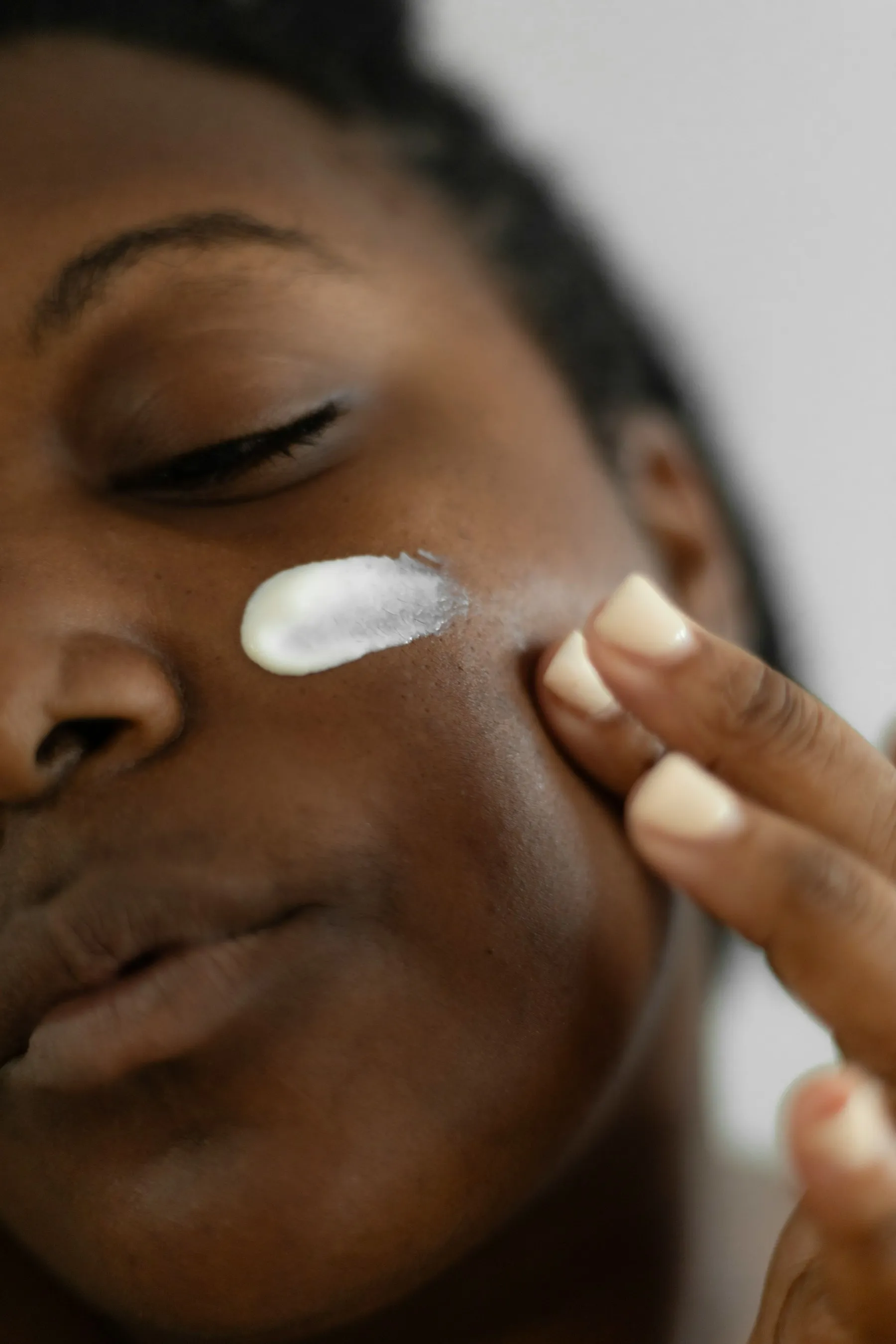
Good protection depends on use as much as choice of product. The AAD notes that many people apply only 20 to 50% of the recommended amount.
Practical points from the AAD, NHS and BAD:
- Amount: at least a teaspoon for the face, and about one ounce (a shot glass) for exposed skin on the body, per the AAD.
- Timing: BAD suggests applying 15 to 30 minutes before going out, ideally in two layers.
- Reapplying: about every two hours outdoors, and after swimming, sweating or towel drying.
- Every day: BAD suggests making it part of your morning routine.
- Cloudy days: the AAD notes that up to 80% of harmful UV rays can pass through clouds.
- Expiry: discard products past their date, or if color or texture has changed. The AAD notes FDA rules require sunscreens to keep their strength for at least three years.
- Water resistance: this lasts 40 or 80 minutes, according to the AAD.
If you use a prescription melasma cream, the AAD suggests this order: medication first, then sunscreen, then any camouflage makeup.
Protection beyond sunscreen
No sunscreen offers 100% protection, BAD notes, and it should add to clothing and shade rather than replace them. Useful habits include:
- A wide-brimmed hat that shades the face, neck and ears
- UV-protective sunglasses
- Shade during peak hours (the NHS and BAD mention 11 am to 3 pm in the UK)
- Checking the UV index; the NHS advises protecting skin when it is 3 or higher
- Avoiding sunbeds, which BAD lists as a melasma trigger
BAD also advises choosing gentle, fragrance-free skin care to avoid irritation.

A note on vitamin D
Strict sun avoidance can lower vitamin D levels. BAD suggests that people who avoid the sun consider having their levels checked, and consider supplements or vitamin D-rich foods if levels are low.
Keeping expectations realistic
Sun protection helps other treatments work and helps maintain improvement. BAD notes that if melasma improves, the effect can be maintained by protecting the skin from the sun. DermNet cautions that good results can be lost after summer sun exposure. That is why consistent daily habits matter more than any single product.
If you are unsure which sunscreen suits your skin or treatment plan, a dermatologist can help you choose.
Sources
- Sunscreen FAQs American Academy of Dermatology
- How to select a sunscreen American Academy of Dermatology
- Sunscreen and sun safety NHS
- Photoprotection beyond ultraviolet radiation: A review of tinted sunscreens Journal of the American Academy of Dermatology (via Europe PMC)
- A novel method for evaluating sun visible light protection factor and pigmentation protection factor of sunscreens Clinical, Cosmetic and Investigational Dermatology (via PMC)
- Melasma patient information leaflet (June 2024) British Association of Dermatologists
- Melasma (facial pigmentation) DermNet
This article is general information, not medical advice. It does not replace an examination, and treatment for pigmentation should be planned with a dermatologist or another qualified clinician who has seen your skin.